
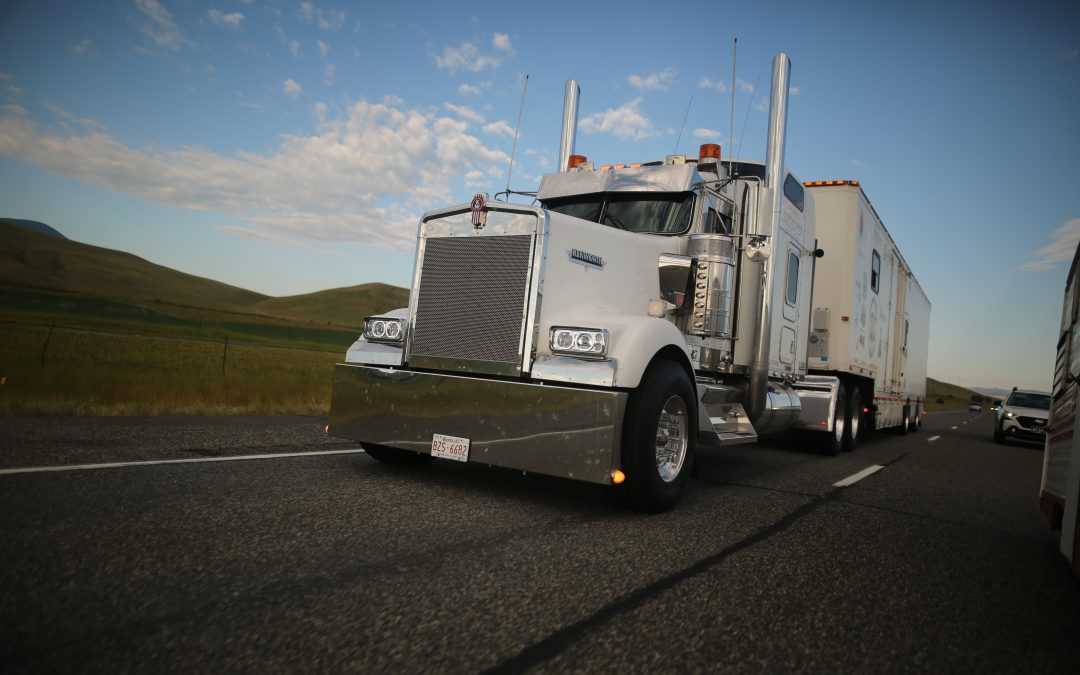
Driving a big, powerful semi truck means aiming for the best possible performance and results. To get there, you need more horsepower. If it were simple, you’d just add a certain number and voila MORE POWER. Unfortunately, that’s not how it works. The horsepower you can achieve depends on the type of semi truck and the loads you’re hauling. With proper maintenance and servicing, tuning your ECM can improve performance.
There is no universal number for increasing horsepower; many factors affect performance and determine what a safe tune can do. These include engine condition, drivetrain capacity, duty cycle, operating environment, and typical load capacity.
If you’re not careful and well-informed on tuning best practices, you risk the health of your engine and potentially your income. At MHPD, our tuners are trained not to blow up engines; we’ve perfected reliable semi truck tuning. You can trust that your engine is in good hands, not generic files and a hope and a dream.
If you want to know how to safely increase your engine’s horsepower, keep reading.
The Determining Factors
If you have two semi trucks with the same engines, it’s easy to think they’ll need the exact same calibrations, but in reality, the factors listed above create differences that affect performance. First, let’s look at the engines as an example.
Engine Model and Configurations
Your engine’s displacement is where you start; you’ll find differences in cylinder size, but generally, the larger the engine capacity, the more horsepower you’ll have. When your engine comes from the factory, it will have a set horsepower and torque rating. The faster the engine completes a cycle, the more horsepower you’ll achieve. This is where ECM calibrations come in. Sometimes, OEM updates or regulatory changes to emissions and fuel quality require your engine control module to be updated. This changes the baseline configurations your tuner will work with to tune your engine for better performance.
Engine Conditions
Speaking of conditions, the overall health of your engine is a major factor in how much horsepower can be safely increased; mileage alone won’t determine health. You need to consider how well-maintained the engine has been over the years and how new it is compared with the same engine that’s 15 years old. Has it been repaired several times? The fuel, air, cooling, electrical, and mechanical systems all need to be assessed before tuning to achieve the results you’re looking for.
An unhealthy engine should never be tuned until its existing problems have been addressed.
Truck and Drivetrain
Your engine is engineered to work with all other drivetrain components; it delivers power and torque to move the truckload. In most semi-trucks, the axle configuration is Rear Wheel Drive, meaning the engine drives the rear wheels while the front wheels steer. Every component needs to function together to determine the truck’s momentum. This includes tire size, the engine’s cooling capacity, and the transmission’s gear ratios to provide optimal torque and power from the engine.
Loads and Duty Cycles
Every truck has a different level of demand, and they are built differently to manage those loads. You can’t expect a semi truck that weighs 80,000 pounds to also handle daily deliveries within a city; the same goes the other way around. Your neighbour Bob’s pickup truck can’t pull the same load across the country as a tanker truck. That being said, a semi-truck engine needs to withstand more conditions while maintaining efficient fuel economy and horsepower.
The amount of power required depends on the specific application. The horsepower for a diesel engine of construction machinery is not the same as the horsepower you need daily for agricultural tractors or oversized loads driving on the highway.
Horsepower Vs Torque
Let’s define the two main components that enhance your engine performance. Horsepower and torque.
Horsepower is how rapidly force is applied over some distance. Specifically, a single unit of horsepower represents the energy required to move a 33,000-pound weight one foot in one second. Torque is a rotating force produced by an engine’s crankshaft. The more torque an engine produces, the greater its ability to perform that force.
Horsepower and torque are often seen as the same thing, but they are different, and both descriptions can be correct depending on context. Torque is the engine’s capacity, while horsepower is how quickly it can deliver it. In other words, horsepower is the rate of completing the application of torque in a given amount of time.
Custom ECM Calibrations and Performance
Think of your engine control module as the brain of the operation. It manages every aspect of your engine’s performance, interprets sensor data, responds to driver inputs, manages engine protection strategies, and controls power delivery under different conditions.
Semi-truck tuning recalibrates specific components to increase power and performance without compromising your safety or your engine’s. It’s a delicate balance that only professional tuners understand. Depending on the engine and application, calibration can affect fuel delivery, injection timing and other injection events, torque management, throttle response, turbocharger and boost control, and diagnostic and emissions-related operation.
Changing one area can affect several others. For example, increasing fuel delivery without sufficient airflow can raise exhaust gas temperatures and produce inefficient combustion. Likewise, increasing low-RPM torque without considering the drivetrain can place additional stress on the clutch, transmission, driveshafts, and differentials.
That is why MHPD does not apply the same tuning file to every truck.
While it might seem easy to upload a tuning file to your engine’s ECM, it’s not easy to understand how every number, graph, and small change affects the optimal performance of your engine. The quality of your engine tuning is determined by expertise, experience, and dedication to precision.
| Generic Tuning File | MHPD Custom Calibration |
| Selected primarily by engine or ECM type | Based on the complete truck and application |
| Predetermined output | Appropriate target established through thorough assessment |
| Limited baseline information | Diagnostics and baseline dyno-testing |
| Focuses on number gains | Focuses on usable, verified performance |
| Verified through dyno testing | |
| Adjusted for duty cycle and operating goals |
If you’re looking for more details about the programming process, you can continue to MHPD’s semi truck tuning and Heavy Truck ECM Tuning articles.
How MHPD Determines the Right Target
MHPD follows a structured process to determine how much performance makes sense for each truck:
- Understand the truck and application. We review the engine, truck configuration, typical load, route, terrain, operating RPM, and duty cycle.
- Define the problem or objective. We identify what the owner wants to improve and how the truck currently behaves.
- Review the engine and supporting systems. Existing components, modifications, cooling capacity, and drivetrain limitations are considered.
- Complete diagnostics. Fault history, operating data, sensor information, and relevant component conditions are evaluated.
- Establish a dyno baseline. Current wheel horsepower, torque, power delivery, and consistency are measured.
- Recommend an appropriate target. MHPD determines what level of performance suits the truck, workload, and reliability expectations.
- Develop the custom calibration. The ECM calibration is prepared for the specific engine and application.
- Test the complete truck under load. MHPD’s tri-drive dyno measures how the truck performs through its drivetrain.
- Review the measured results. Baseline and final data are compared, with attention to the complete power curve and operating behaviour.
- Refine and verify the calibration. Additional adjustments are made where required, and the final result is confirmed.
This process is supported by Mario’s more than 40 years of diesel experience, custom calibration knowledge, complete-truck dyno testing, and evidence-based recommendations.
MHPD also provides a lifetime tuning warranty on its programming. That warranty applies to MHPD’s calibration work. Mechanical components, electrical systems, sensors, connectors, and vehicle wiring are separate from the programming warranty and must be diagnosed based on their own condition.
Find the Right Power for Your Application
Proper semi truck tuning makes all the difference when balancing horsepower and reliability.
The correct performance target is not automatically the largest horsepower or torque number available. A reliable result depends on engine condition, supporting component capacity, truck configuration, normal workload, and how the ECM calibration coordinates those systems. Dyno testing then verifies whether the proposed changes produced useful and repeatable performance.
That is the difference between adding power and developing the right power for the application. Contact MHPD for professional semi-truck tuning to determine which level of emissions-compliant tuning makes sense for your truck, engine, typical load, and operating goals to improve the efficiency and performance of your fleet.