
Becoming a dyno tuner requires more than learning how to operate tuning software or produce a higher horsepower number. A qualified tuner must understand how fuel, airflow, engine condition, ECM calibration and mechanical components work together.
That makes dyno tuning a strong career path for technicians who enjoy diagnostics and data. It requires patience, sound mechanical judgment and the discipline to test before making a recommendation.
Start With Diesel Engine Fundamentals
A dyno measures performance, but the operator must explain what the results mean. This requires a practical understanding of diesel combustion, turbocharger operation, fuel delivery, cooling systems, sensors, wiring and engine protection strategies.
Fuel testing is an important part of that knowledge. Its properties can affect combustion, injection quality and component life. Fuel that has degraded or contains water, debris or microbial contamination may cause restricted filters, unstable fuel pressure, injector problems, smoke or reduced power.
However, one fuel sample cannot explain everything happening inside an engine. A dyno tuner must consider fuel-test results alongside the engine’s condition, service history, operating data and intended application.
Learn Diagnostics Before Calibration
A good tuner does not assume that every performance problem requires an ECM change.
Low power could be caused by restricted airflow, a boost leak, insufficient fuel pressure, a worn injector, a faulty sensor, or an existing emissions system fault. Increasing fuel delivery without finding the restriction may only create more smoke, higher exhaust temperatures and additional engine stress.
This is why systematic troubleshooting is fundamental to becoming a dyno tuner. Our guides to identifying diesel engine problems, Parts One and Two, demonstrate how to investigate symptoms before parts or programming are changed.
Understand Baseline Testing
Every credible dyno evaluation begins with a baseline. This documents what the truck produces before repairs, parts, or calibration changes are made.
A baseline may include:
- Fault and service history
- Fuel pressure and engine operating data
- Wheel horsepower and torque
- Power-curve shape
- Response and consistency under load
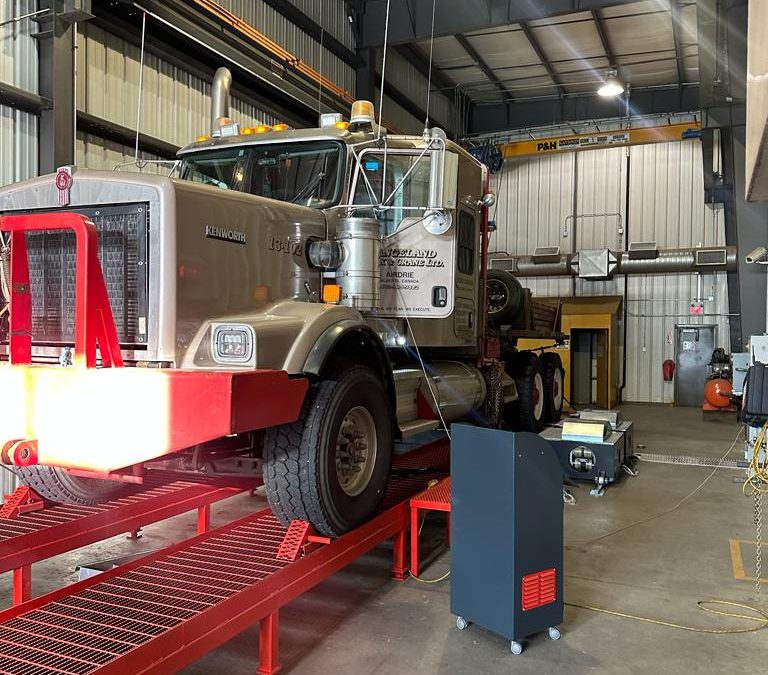
Our tri-drive dyno tests the complete truck under controlled load. This lets the operator compare the baseline with the final result and determine whether a change produced measurable improvement.
Without a baseline, a tuner may know the final number but not how much the truck improved, or whether it developed a new problem.
Interpret the Complete System
Becoming a dyno tuner means learning how to connect different forms of evidence.
For example, a fuel test may show acceptable cetane, cleanliness, lubricity and viscosity. That does not prove the filters, pumps, injectors, turbocharger, sensors and ECM calibration are working correctly. Conversely, an injector failure does not automatically prove that poor fuel caused it.
The tuner’s role is to compare the evidence, identify the current limitation and recommend the next step. That recommendation could involve a repair, further testing, a compatible component or a custom calibration.
Develop ECM Calibration Skills
ECM calibration can affect fuel delivery, injection events, boost control, torque management, throttle response, diagnostics, and engine protection strategies. These systems cannot be treated as independent settings.
We provide emissions-compliant tuning services. Required emissions systems must remain operational, and existing fuel, mechanical or emissions faults should be addressed before performance changes are considered.
The correct target also depends on the application. A highway truck, a heavy-haul unit, and an agricultural engine experience different loads and operating conditions. The goal is not simply to deliver the horsepower number someone requests. It is to determine what the complete engine and vehicle can reliably support.
Build Experience Under Qualified Guidance
The path into dyno tuning usually begins with diesel mechanical experience, electrical diagnostics and OEM diagnostic software. From there, a technician can learn safe dyno setup, controlled testing, data logging, and calibration analysis under the supervision of experienced technicians.
Software access alone does not make someone a tuner. Competence develops through repeated testing, careful documentation and exposure to different engines, failures and applications.
Our approach to dyno testing and tuning reflects that responsibility: diagnose the problem, establish the baseline, make a measured change and verify the result.
MHPD specializes in advanced heavy-duty diesel diagnostics, ECM calibration, and custom dyno testing solutions. By combining deep technical expertise with state-of-the-art equipment, they help shops and technicians maximize diesel engine performance while maintaining emissions compliance. Learn more about our team and mission on the MHPD About page.
Interested in developing diesel tuning capabilities within your shop? Talk to us about the experience, equipment, and technical support involved in joining our dealer network.