
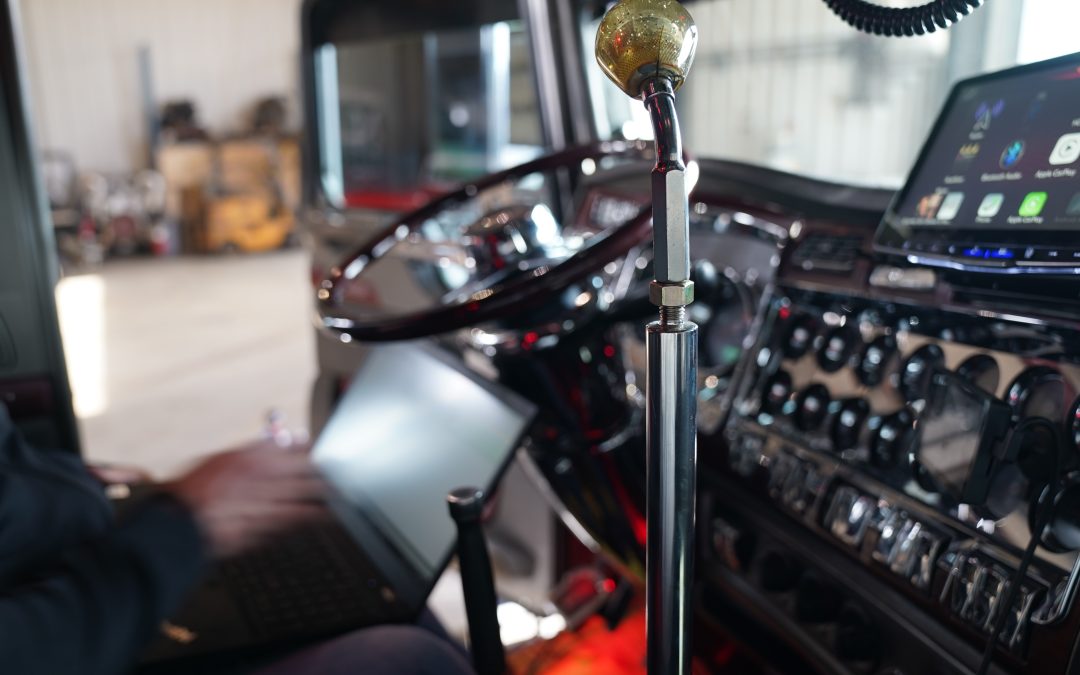
The engine control module(ECM) is the brain of a modern diesel engine, but it does not create power on its own. Instead, it takes in data from sensors, responds to driver input, and manages how the engine’s parts work together. This setup lets technicians check diagnostics, update programming, and fine-tune calibration settings.
Even with advanced programming software, there are limits to what it can do. It cannot check for damaged parts or tell if a sensor reading is correct. Software also cannot determine what the drivetrain can handle or measure how much power actually reaches the tires. To answer these questions, you need careful diagnostics, diesel expertise, and controlled testing.
MHPD offers custom-calibrated and emissions-compliant ECM tuning for any high-performance diesel trucks, farming equipment, and diesel fleets. Keep reading to learn more about ECM tuning and how MHPD uses dyno testing and dyno tuning software to enhance your engine’s performance.
What Can High-Performance Diesel Truck ECM Tuning Do?
Adjusting the calibration can affect how a truck runs. But simply installing a tuning file does not guarantee it is right for your truck. A good ECM tuning process should answer key questions, such as: Is the engine working properly before tuning? What limits its performance? What are the truck’s daily tasks? How much power can the engine and drivetrain handle? Where does the truck need torque in the RPM range? Did the calibration achieve the goal? Are all required emissions systems still working?
MHPD addresses these questions by using diagnostics, custom calibration for each application, and full-truck dyno tuning and testing. These steps work together as one complete process.
Each step affects the next. The truck’s condition sets the starting point, and its daily needs set the performance goals. Custom calibration makes the needed changes, and dyno testing checks the results.
At MHPD, every calibration change must fit the vehicle, be tested under real-world operating conditions, and pass full emissions checks before it is finalized.
What Is High Performance Diesel Truck ECM Calibration?
Software is the group of programs that lets the ECM work. Calibration consists of the specific values, limits, and control methods the ECM uses within the software. Learn more about heavy-duty equipment tuning.
Here’s an easy way to see the difference:
- The hardware is the physical ECM.
- The software provides the operating structure.
- The calibration determines how supported engine strategies behave within that structure.
ECM tuning means checking or changing calibration settings to adjust how the engine responds and performs.
This doesn’t mean just by raising a number you’ll get more horsepower. The ECM manages many connected systems, so changes to fuel, torque, airflow, or response in one area can affect other aspects of how the engine runs. What matters for diesel truck owners is that a good calibration takes more than just picking a file for the engine model. Check out our semi-truck dyno testing services.
What Does the ECM Control?
Fuel Delivery
The ECM controls how much fuel is requested and delivered during normal operation. The amount of fuel must match the available air, engine speed, load, part limits, and required torque. Adding extra fuel without enough air can cause heat, smoke, and waste, without making more useful power.
The ECM can control fuel delivery, but it cannot fix every physical problem. Issues such as a weak pump, a clogged filter, a damaged fuel line, a worn injector, or unstable pressure can prevent the fuel system from meeting calibration requirements.
Injection Events
Modern diesel engines use carefully timed injection events. Depending on the engine, the ECM may control when injections occur, how long they last, the injection pressure, and even the number of injections per cycle.
These strategies affect how the engine burns fuel, how it responds, the noise and heat it makes, its emissions, and how it delivers power. They depend on airflow, fuel system limits, engine condition, and cylinder pressure. The goal is to control combustion, not just add more fuel.
Torque Management
Modern diesel calibration often focuses on torque. The ECM reads the driver’s inputs and current conditions, then calculates or limits torque and manages how it is delivered. Torque management can include:
- Accelerator input
- Engine speed
- Transmission requests
- Gear selection
- Vehicle speed
- Engine protection limits
- Temperature
- Traction or vehicle-control requests
- Emissions-related operation
Adjusting torque delivery can make a truck feel more powerful, especially when carrying a load. But too much torque at low engine speeds can put extra strain on the engine and drivetrain.
Parts like the clutch, transmission, driveshafts, U-joints, differentials, and axles all need to handle the extra load.
Throttle Response
In modern diesel trucks, pressing the accelerator pedal sends an electronic signal. The ECM reads this signal and decides how the engine should react.
Calibration can change how fast and smoothly torque is delivered. A quicker response can make the truck feel stronger, but a faster pedal reaction does not always mean more actual power.
For work trucks, steady and predictable control is often more important than a fast or aggressive response. The best approach depends on how the truck is used.
Turbocharger and Boost Control
On some engines, the ECM controls the turbocharger based on engine speed, load, airflow, pressure, temperature, and other conditions. The aim is not just to get the biggest boost in reading. Things like turbo size, intake restrictions, charge-air-cooler condition, piping, exhaust flow, elevation, temperature, and engine speed all affect how much usable air gets to the engine. Calibration cannot fix a worn turbo or a boost leak, and it cannot make a poorly sized turbo work perfectly in all situations.
Engine Protection Strategies
Performance calibration should not remove these protections; they are built into the engine’s system. MHPD considers the engine’s condition, its components, the expected load, and where it will be used when making a calibration. Adjusted performance is within the limits of what the whole engine can safely handle.
Diagnostics and Emissions-Related Operation
The ECM monitors systems, stores fault information, and communicates with diagnostic equipment. It also interacts with required emissions systems. Depending on the engine, these may include:
- Exhaust gas recirculation
- Diesel particulate filter operation
- Diesel exhaust fluid systems
- Exhaust temperature, pressure, and emissions sensors
- Warning and derate strategies
MHPD offers tuning that complies with emissions regulations. All required emissions systems must continue to operate, and any faults must be found and fixed, not hidden or bypassed. Review relevant regulations from the EPA and Environment Canada.
What Can High-Performance Diesel Truck Dyno Tuning Change?
Depending on the engine, truck, and application, custom ECM tuning may change:
- The shape of the torque curve
- Throttle response
- Performance under load
- Power delivery through the working RPM range
- Turbocharger response
- The truck’s ability to maintain its work with fewer unnecessary shifts
Possible results include better performance under load, smoother torque, quicker response, and confirmed changes to wheel horsepower and torque. MHPD does not guarantee a fixed horsepower increase based solely on the engine model. The truck’s condition, parts, drivetrain, how it is used, and performance goals all affect our recommendations. Explore our full range of tuning services and dyno testing options.
ECM Tuning Should Begin and End With Evidence
The ECM controls how a modern high-performance diesel truck responds, builds torque, protects itself, and works with other systems. Changing its calibration can boost performance, but only if the change fits the engine, hardware, drivetrain, and how the truck is used.
Software applies the changes. Diagnostics check if the truck is ready. Professional dyno tuning measures the results. Emissions compliance is always part of the process. The goal is not to use the same file for every ECM or chase the biggest numbers. It is to create reliable, repeatable performance for the truck’s real work.
Contact MHPD to discuss your engine, truck setup, usual load, and any performance questions. Find out if your truck needs a diagnosis, repair, or custom emissions-compliant dyno tuning, and book a full dyno test to check the results.