
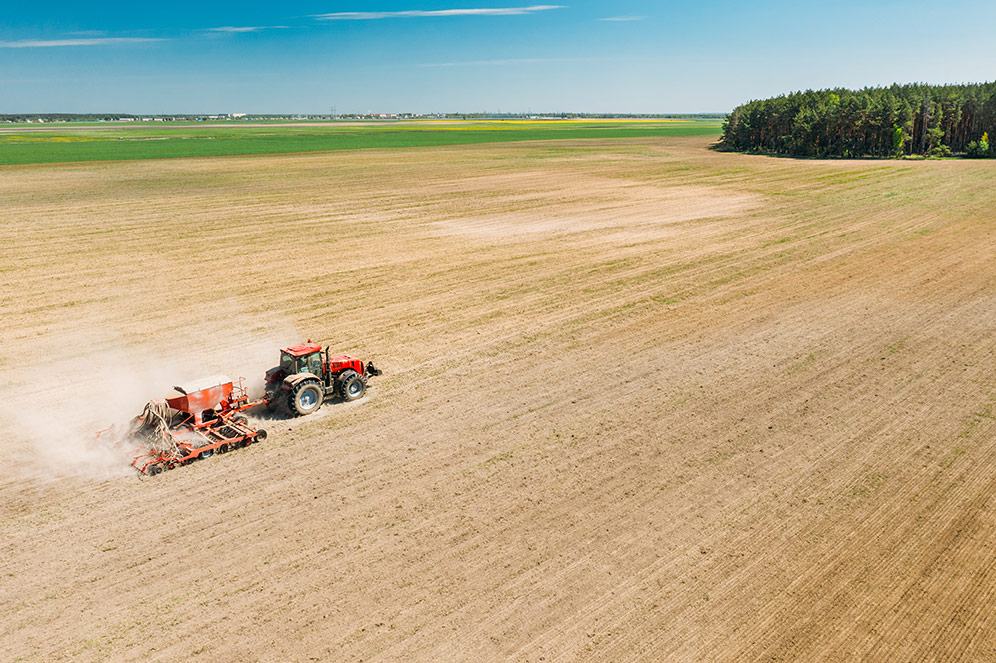
When evaluating engine calibration, a one-size-fits-all approach fails because no two diesel applications demand the same work from their engines. A Class 8 highway truck hauling freight across flat terrain operates under vastly different conditions than a tractor pulling an air seeder or a combine harvesting in heavy field conditions. Understanding how loads and duty cycles dictate engine demands is the foundation of effective agricultural diesel tuning. At MHPD, custom ECM calibrations are engineered around real-world agricultural workloads to maximize usability, efficiency, and long-term engine health.
Loads and Duty Cycles in Agriculture
In heavy-duty agricultural diesel tuning applications, the duty cycle describes the duration, intensity, and frequency of engine loading over time. Highway semi-trucks typically maintain steady speeds at partial throttle, operating within a predictable RPM band. In contrast, farm equipment endures sustained high-load demands for 12 to 14 hours continuously during peak seeding or harvest seasons.
Tractors, combines, and sprayers must deliver continuous low- and mid-range torque while pulling heavy implements through changing soil conditions, PTO demands, and hilly terrain. Expecting a tractor engine to perform reliably using generalized tuning files ignores these distinct operational demands. Proper agricultural diesel engine tuning customizes calibrations specifically for low-speed torque and continuous load stability rather than peak high-RPM horsepower.
Horsepower and Torque That Match Your Workload
Horsepower represents how quickly energy is delivered, while torque is the fundamental rotating force produced by the engine crankshaft. When optimizing agricultural diesel tuning for farm machinery, peak horsepower numbers mean very little if the engine bogs down under heavy draft loads.
When tuning ECM software for farming applications, increasing low-RPM torque is critical. This enables equipment to maintain pulling power without constant downshifting or thermal overload. However, adding torque without considering the complete drivetrain, such as gear ratios, cooling system capacity, and hydraulic load, can place excessive stress on internal components. Custom ECM tuning for heavy equipment coordinates injection timing, boost pressure, and fuel delivery to maintain ideal air-fuel ratios and exhaust temperatures during hours of sustained operation.
Data-Driven Tuning for Reliability
At MHPD, custom calibration for agricultural diesel tuning is never based on pre-packaged template files. Every piece of equipment undergoes diagnostic evaluations to verify underlying mechanical health before any programming takes place. By evaluating the specific application, typical load weights, and seasonal operating cycles, custom tuning delivers:
- Stronger low- and mid-range torque: Confident pulling power where machinery spends its working hours.
- Improved fuel efficiency: Optimizing fuel delivery during continuous, high-hour field work.
- Consistent operation: Reduced operator fatigue and smoother throttle response under load.
- Safeguarded equipment: Complete protection of factory diagnostics and emissions-compliant operation.
Optimize Your Farm Equipment with MHPD
Matching engine calibration to your actual workload is the key to balancing performance and longevity.
Discover how MHPD’s data-driven tuning services and rigorous dyno testing and tuning deliver reliable power built for your operation. Contact MHPD today to discuss your agricultural equipment needs.